
Most Accurate Dispensing Solutions
Laboratory Powder Dispensers
Our solid dispensers do away with tedious and time-consuming manual dispensing of powders. These laboratory dispensers allow repeated dosing of substances in precise amounts fast, accurately and safe.

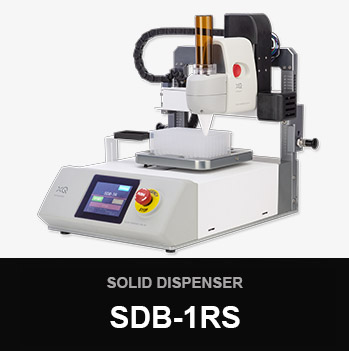
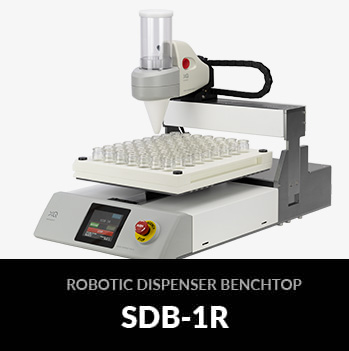
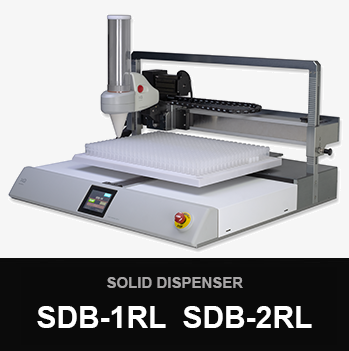
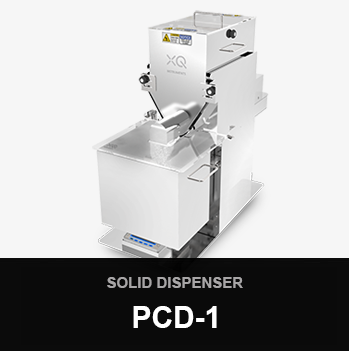
Our Products Features

1. Speed
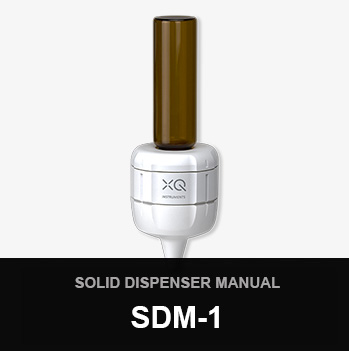
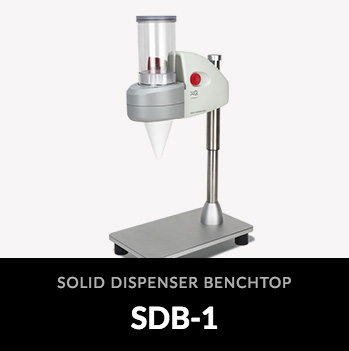
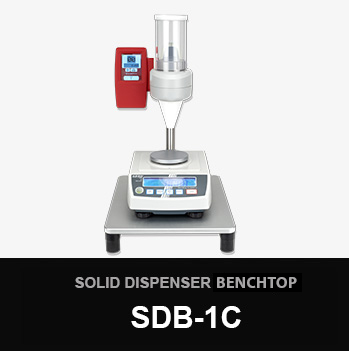
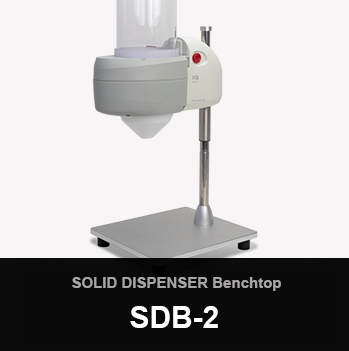
Manual solids dispensing can be laborious as it requires to progressively pour and check the amount on the scale to be dispensed. The solid dispenser (SDH/B/M-1) offers consistent and accurate dosing, time after time.
2. Versatility
The auto powder dispenser is able to handle a wide range of solids, beads and microspheres. XQ Instruments offers testing and calibration with the target powders before shipping the device to the customer.
3. Ease of Operation
The user only needs to fill or attach the reservoir to the dispenser, select the number of shots and press the trigger button. Whether battery operated handheld dispenser or bench-top, the powder dispensing equipment is mobile and can be used in different context and location.
Materials Validated
- 2.5 Dihydroxybenzoic
- 2-Aminoacridone
- 2-Chloroacetamide
- 2-Mercaptopyrinde-1-oxide Sodium (C3H4NNaOS)
- 35Cr3Ro Powder
- 3-O-Ethyl-L-ascorbic acid
- 4-Diazodiphenylamine_Negative Diazo Sensitizer
- Acetaminophen)
- Acrylic Acid_Acrylamide (Poly)
- ACTIVA TG-BP-MH (MSG Products)
- Aerosil
- Agar (T.C. Grade)
- Agar Noble
- Agarose
- Agmatine Sulfate
- Algae (Spirulina)
- Alpha GPC
- Aluminium Hydroxide
- Aluminium Nitride
- Aluminium Silicon
- Aluminum oxide (Alumina)
- Amberlite XAD7HP
- Amino Acid
- Ammonium chloride (NH4Cl)
- Ammonium Sulfate
- Anasorb Solvent
- AP100 (Gun Powder)
- Arena – MSVC
- Asar
- Ascarite (Sodium Hydroxide silica)
- Ascorbic Acid
- Ash (Juniper Ash)
- Ashwagandha
- Tea
- Ast85Mo (Manganese Carbon Powder)
- Asteroid Simulant
- ATP (Adenosine-5′-triphosphate disodium trihydrate)
- Azul Brillante
- Bacto Agar
- Baking Soda (NaHCO3)
- Barium titanate
- Barley Product
- Benomyl 50WP
- Bentone EW
- Bentonite
- Benzoyl peroxide
- Beta-alanine
- Betaine anhydrous
- Bismuth
- Bismuth oxide
- Black pepper extract
- Bleaching Powder (Ca(OCI)²)
- Blue2B
- Boiled Peanut
- Bone Powder/Granule
- Bone Cement
- Boric Acid
- Boron
- Bovine Serum Albumin (BSA)
- BV Powder
- C18
- Cab-O-Sil
- Caffeine Anhydrous
- Calcium Carbonate
- Calcium Chloride
- Calcium copper titanate
- Calcium Gluconate
- Calcium Silicate Hydrate
- Calicium Oxalate Monohydrate
- Calcium stannate (CaSnO3)
- Calcium silicate hydrate (CSV)
- Calcium stannate (CaSnO3)
- Calcium sulfate hemihydrate (CSH)
- Cane Sugar
- Caolin / Kaolin
- Carbon Activo
- Carbon Powder / Coal powder
- Carbopack
- Carborex / Silicon carbide
- Carboxylmethyl
- Cellulose
- Celite
- Diatomaceous Earth
- CELL-IN
- Cellulose
- Ceramic Beads, Bearings, powder
- Cereals Flakes
- Cereox
- Cesium Carbonate
- Chaga
- Chloroacetamide (2-Chloroacetamide)
- Chlorotrityl Chloride
- Chocolate Powder
- Chondrotin Sulfate
- Cinnamon Extract
- Citric Acid sample
- CL-F
- CMC
- Coconut water powder
- Coffee Creamer
- Coffee Sample
- Collagen
- Colossis Powder
- Concentrated Aloe Vera
- Copper Powder
- Colossis Powder
- Copper Sulphate (CuSO4)
- Cordyceps
- Cornmeal
- Corn Starch
- Cotton Isotope
- CPG
- Cracked Corn
- Creatine
- Crushed Barley
- Cryolite
- Crystal Flakes
- Cysteine
- DAX-8 Supelite
- Dental Amalgam powder
- Detergent
- DFI TCEP
- Dharmacon CPG Support
- Diaion HP-20
- Diatomaceous Earth
- Disodium Hydrogen Phospahte Anhydrous
- Dithane M-45
- Dithiothreitol (DTT)
- DL-Phenylaline
- D-Luciferin Potassium Salt
- Dithiothreitol (DTT)
- Dried Cinnamon Extract
- Dried Hay
- Dry Soil
- Dust Powder
- DV01M075
- Dye
- Earl Tea
- EDTA
- Egg Powder
- Elderberry Extract
- Enzymatic Cleaning Detergent
- Epsom Salt
- Essential PBR-FD
- Essential SOFT 1500
- Ethylene Glycol Reagent
- F3 Powder
- FE/BN
- Ferrocyanure Powder
- Fiber One
- Fine Sand
- Fishfeed (pellets)
- Florisil
- Flour
- Fluorescent GRN Polyethylene Microspheres
- Fluoresciine
- Folic Acid
- Freeze Dried Exomes
- Freeze-dried mussel tissue
- Fruit Drink Powder
- Fused Silicia
- Gatorade Zero
- GHK-CU
- Gelatin
- Ginger Root Extract
- Ginkgo Biloba
- Glass Beads
- Glass Microsphere
- Glass Powder
- Glitter
- Glucose
- Glycerol
- Gold
- Granular fish feed
- Graphene (FE/BN)
- Graphite
- Graphitize Carbon Black Powder
- Green G
- Green Tea extract
- Grosafe Carbon
- Ground Glass
- Ground Glass & UHMC-PE
- Guar Gum
- Guarana
- Guava seed extract
- Gun Powder
- Gypsum
- HCCA
- Himalayan Pink Salt
- HL Powder
- Hydrophillic Fumed Silica
- Huperzine A
- Hydroxyapatite (HA)
- Inert Beads
- InterOss
- IRM Capsule Powder
- Iron (Fe)
- Iron chip accelerator
- Java Boost
- Java Edge
- Juniper Ash
- Kalium Sorbate
- Kaolin Powder_Caolin
- Kaolinite
- Lactose
- L-Arginine
- L-Ascorbic Acid
- L-Citrulline
- L-Cysteine
- Lecocell
- Licowax
- Light Silver
- Lignocellulosic biomass
- Li-HPTIC
- Lithium Bromide
- Lithium Chloride
- Lithium Tetraborate
- L-Leucine
- Low Binding Silica Beads
- L-Taurine
- L-Theanine
- Lyophilized Exosomes
- LTP
- L-tyrosine
- Lysis Beads
- Magnesium
- Magnesium Stearate
- Magnesium Sulfate (MgSO4 )
- Maleic Acid
- Malic Acid
- Maltitol
- Maltodextrin mixture
- Manganese Dioxide / Silver Oxide Filter
- Mannitol
- Matcha
- Maturation Medium
- Mayonnaise Compound
- Meltodextrin
- Menthol
- Metal Beads
- Methacrylic Polymer Resin
- Methanol Reagent
- Methylene
- Methylene Blue
- MGS-1 Simulant
- Microbeads
- Microcrystalline
- Microcrystalline Cellulose (MCC)
- Microsilver
- Microsphere powder
- Millet
- Mixed Salt
- Mixture of sand & iron filings
- Monk Fruit Extract
- Mosquito Eggs
- MTA White
- Natural Graphite
- Natural Vegetable Carbon Black
- Na-acetate (C2H3NaO2)
- N-Acetyl-L Cystéine
- NAF
- NEFA Enzyme Color Reagent
- Nickel (II) Chloride (NiCl2)
- Nicotinamide Adenine
- NMC Powder
- Non toxic Algae
- Nylon Powder
- Oat / Oat Flour
- Oat Silk
- Octreotide
- Orange 3G
- Ox Bile Product
- Oxalic Acid
- PA01MXXX
- Paracetamol
- Paraformaldehyde
- Peanut Flour
- Pearl Barley
- Pearl Color Powder
- Pearl Oyster Powder
- Pearlite
- Peat
- PEG A
- PEG B
- P-Formaldehyde
- PH-10 Mix (Sodium Carbonate/Sodium Bicarbonate mixture)
- Phenolic resin
- Phosphate Granules
- Phytagel
- Pink amide MBHA Resin
- Platinum Iridium Powder
- PLGA
- Poly (D,L-lactide-co-glycolide)
- Poly(acrylamide/acrylic acid)
- Poly(vinyl chloride) carboxylated
- Polycabonate Granules
- Polymer powder
- Polymeric acrylate-coated magnetic nanobead(Fe3O4).
- Polymyxin B Sulfate
- Polystyrene
- Polyvinylpyrrolidone
- Potassium
- Potassium Acetate
- Potassium Alumina Silicate (Sericite Mica)
- Potassium Bicarbonate
- Potassium Bromide
- Potassium Carbonate (K2CO3)
- Potassium Chloride
- Potassium Citate
- Potassium Metabisulfite
- Potassium Nitrate (OxP154)
- Potassium Oxalate
- Potassium Permanganate Filter
- Potassium Phosphate (K3PO4 )
- Potassium Sulfate
- Potato Starch
- Probiotics
- Pronase
- PROROOT MTA
- Protainese K
- PS/DVB Microspheres
- Protein Diet
- Pure Gold
- Pure Tea
- Putty Bioglass
- Putty TCP
- PVDF
- PVP40
- Pyrenetetrasultonic Acid Salt
- Pyrolyzed Polymer Carbon Beads
- QL Powder
- Rebone Granules
- Red 2G
- Red Violet R
- Reishi
- ReliOx Resin
- Respitose SV003
- R-flex powder
- Rhodamine
- Rooibos
- Rubber
- RX Pill Disposal XL
- S690 MICROCLEAN
- Saffron
- Salmonella Supplement
- Sand
- Saponin
- SDS
- Sebum Powder V2
- Serum minus IgG human Lyophilized Powder
- SF 100
- Sickle Powder
- SiliaSphere Phenyl 40-75mm
- Siliasphere Phenyl, 70A
- SiliBeads
- Silica
- Silica Dioxide
- Silica Gel
- Silicon carbide
- Silicon Dioxide
- Silicon Oxide
- Silver Glitter
- Silver Iodide
- Silver Powder
- Sinapic acid
- SiO2
- SiO2C5 Powder
- Sodium Ascorbate (Ascorbic Acid)
- Sodium Bicarbonate
- Sodium Carbonate
- Sodium Chloride (NaCl)
- Sodium Cyanoborohydride
- Sodium Dichloroisocyanurate
- Sodium Dodecyl Sulfate (SDS)
- Sodium Dithionite
- Sodium Fluoride
- Sodium Hyaluronate
- Sodium Hydrogen Phosphate
- Sodium Hydroxide (Ascarite)
- Sodium Molybdate
- Sodium Percarbonate
- Sodium Peroxide
- Sodium
- Sodium Iodate
- Sodium L-ascorbate
- Sodium Metabisulfite
- Polyacrylate granules (SAP)
- Sodium Sulfate (Na2SO4)
- Sodium Sulfate (Na2SO4)_Sulfite
- Sodium Sulphite, Anhydrous (Na2SO3)
- Sodium Thiosulphate
- Soil sample
- Solder Bits 0.63 x 1mm
- Sorbitol
- Special Effect Powder
- Spirdust (X000S8KK8T)
- Spirulina powder (Algae)
- Starch
- Starch(Emulsiform 2310)
- Steel Beads
- Stem Cell Serum
- Strip Bioglass
- Strip TCP
- Succinimidyl
- Sucrotose
- SUREFIL ONE
- Talcum Powder
- Tapioca Starch
- Taurine
- Tenax TA
- Theanine
- Theobromine
- Titanium Dioxide (TiO2)
- Tocopheryl Acetate
- Tourmaline
- Tricyclic amid linker resin
- Trisodium Phosphate
- Triturate
- TSB
- Tungsten
- Tungsten Oxide
- Tyrosine
- TZ Powder
- Ultima Electrolyte
- Urea
- Vanilla
- Versene
- Vitamins
- Wheat Brand
- Whey Isolate
- WITCH HAZEL HERBASEC
- Wood dust
- Wool Isotope
- WPX Carbon
- Xhantan Gum
- Yttrium (III) Oxide
- Yellow 2G
- Yellow Gold
- Yellow Iron Oxide
- Ytterbium Oxide
- Z Beads
- Zeolite (mycorrhiza powder)
- Zinc (Zn)
- Zinc Citrate
- Zinc Ore
- Zinc Oxide
- Zirconia bead
Methods & Applications
Volumetric Dispenser
XQ Instruments dispensers are volumetric powder dispensers. What this means is that they dispense solids or powders by their volume rather than weight. The volume relates to the weight by the bulk density, which is the weight of the sitting solids for a given volume. The bulk density of solids (for example, a certain volume of the fine solids poured into a beaker but do not tapped) differs significantly from the density of the solids as block material.
The volumetric dispenser operates in an open loop where a certain amount of powder is filled into a fixed chamber and then dispensed at the next step of the process. This is repeated with each fixed dose (volume) being accurately dispensed. The dispenser therefore needs to be calibrated for this fixed dose.
The advantage of volumetric dispensing is the speed of dispensing. The disadvantage can be a lack of feedback on the actual weight of the dispensed dose. XQ Instruments has an automated weighing scale accessory to provide feedback and logging of actual measurements for each dose, the amount (weight) dispensed in each cycle. In such a setup, the user can choose to discard dispensed samples that are outside the accepted weight range.
Workflow
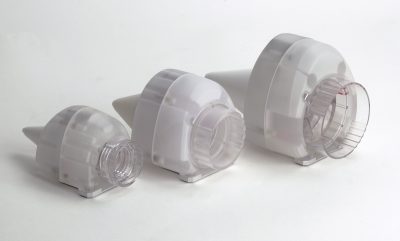
The dispensing disks (the dosing element) are calibrated for a specific dose size as per customer specifications. With the calibrated dispensing disk this dose or selectable multiples of it (up to 99x) can be dispensed. One shot takes 3.5 seconds.
Selecting multiple doses allows to dispense different dose sizes from the same dispensing disk/head, as long as they have a common denominator (resulting in an effect of resolution relative to target doses). However, with multiple doses dispensing time will increase and there can be a stack up error.
To change the single dose values, or switch to a material with different bulk density, the dispensing disk in the dispensing head needs to be swapped with one corresponding to the new value. This takes only a few seconds. Users might have a range of disks available for different materials and dose sizes. Additional disks to new specifications can be ordered from XQ Instruments at any time; e.g., when requirements change.
For switching instantly between materials and dose sizes it can be advantageous to have several heads at disposal in order to swap without the need of clearing out the material and no risk of cross-contamination. The dispensing heads in stand-by can be temporarily stored with material inside (ideally in a dry chamber). Such additional heads with calibrated disks are available as accessories.
Dose Calibration
Calibration of Dispensing Disks

XQ Instruments volumetric solid dispensers employ as dosing element rotating dispensing disks with calibrated chambers. These disks are custom machined precisely to customer dosing specifications and are quickly exchangeable in the dispensing heads.
Powder doses can be specified for calibration in volume or (more typical) in mass. The dispensing principle of XQ Instruments products is volumetric. Therefore, if the dose size is specified in mass, it needs to be converted to volume. The relation of volume to mass is defined by the bulk density of a granular material. Bulk density can vary significantly between materials; common substances fall in a range of 0.2g/ml to 2.0g/ml. That means the difference in mass of the same volumetric dose can vary by a factor of 10.
The relation of dose weight to dose volume can be established with this calculator:
The bulk density of a specific powder can be obtained from material data sheets or literature; here is a list of common materials with their values.
Calibration Approaches
For the dose calibration of our solid dispensers, there are 3 ways to specify the single dose calibration of a dispensing disk or dispensing head:
The target dose volume, typically in mm³
Most direct
The target dose weight and a material sample (preferred for precision)
If an actual sample of the material is available for calibration, the dispensing volume can be tweaked until the mean of a string of doses is very close on the target. This approach results in the best precision in dispensing
The target dose weight and nominal bulk density of the material
Results in volume
If nominal bulk density is not available, the value can be established by weighting of a specific volume of the material (say 50ml, e.g. in a syringe barrel or beaker). That value together with the mass dose target will allow to calibrate.
Bulk density can be obtained from a weighted sample with the calculator below:
Calibration Ranges
The dispensing disks can be calibrated to any volume in the range of the individual head size. These volume ranges are as follows:
| Dispensing head size | Volume calibration range | Dispenser |
| Small head | 2.3 mm³ – 300mm³ | SDH-1, SDB-1 |
| Mid-size head | 2.3 mm³ – 715mm³ | SDH-1, SDB-1 |
| Large Head | 5 mm³ – 8,100mm³ | SDH-1, SDB-1 |
| XL Head | 10 mm³ – 78,000mm³ | SDB-2 |
For small doses, the smaller dispensing heads are not more precise than the large ones. On the contrary, the large dispensing head can cope best with challenging materials in small doses. Therefore, it is the typical choice for the larger benchtop SDB-1. For the more compact form factor of the handheld SDH-1 the small and medium size head would be usually selected, even though the large head will also fit. The SDB-2 comes with its own XL head.
Glass Beads
Microspheres or glass beads are dispensed into a variety of mediums for specific applications. These glass beads exhibit high mechanical strength, chemical stability and limited thermal expansion. They flow freely which is a good quality for accurate, repeated dispensing by XQ Instruments dispensers. As glass beads are resistant to moisture, they remain consistent in their density and do not stick together forming clumps. They are one of the most commonly used solids in our dispensers and sizes vary from the nanometres to millimetres range.
FAQ
1. What is volumetric dispensing?
Volumetric dispensing is the dispensing principle which portions the volume of a sample (like a measuring spoon). If the mass is used instead (on a scale) the principle is gravimetric dispensing.
2. How precise are the dispensers?
Precision depends on dose size (larger doses are more consistent) and material properties. The dispensers can also be tweaked to improve performance for specific materials; we can assist in that. Typical values (for typical materials and dose sizes) are +/- 3%.
3. Which materials can be dispensed?
Most solids can be dispensed. A list of materials typically used on our dispensers can be found here. Dispensing error will vary with specific material properties. Challenges are moist or wet materials, substances which tend to clump strongly and granular materials with very irregular granule size and shape.
4. How small can the doses be?
A typical lower limit is 2mg of material. However, at very small dose sizes the dosing error increases, and some challenging materials might not dispense consistently anymore.
5. Are the dispensers able to dispense beads?
Yes, our dispensers can dispense beads up to a diameter of 3mm if the dispensing disks are adjusted to the specific size. Beads need to be very consistent in diameter.
6. Can I just dial in a dose value and have it dispensed?
Unfortunately, single dose sizes are determined by the dispensing disks which can only be modified by exchanging the disks. Only multiples of the calibrated dose size of the dispensing disk can be selected.
7. What influence does ambient humidity and moisture in the material have?
Dose mass will fluctuate with moisture content, while the amount of material, dosed by volume, stays the same. In gravimetric dispensing this can lead to a masked error, since the dose mass seems consistent. However, the material dispensed consists of a variable part of water, with accordingly more or less material. In volumetric dispensing this difference in mass can be seen when weighting. The dose of the actual material volume is consistent.
Very dry environments (e.g dry labs) can amplify issues with powders prone to static.
8. Should I order additional dispensing heads or dispensing disks for different materials and dose sizes?
If there is a frequent swap between materials, additional dispensing heads are useful since the material can be left inside and it is not necessary to empty out the material and clean; also there is no risk of cross-contamination. Each head can be calibrated to different specificatons (material density and dose size).
Dispensing heads with material can be set aside at least temporarily on a rack to be swapped in again when needed.
If, however, materials and doses sizes are only changed between batches, just having the additional dispensing disks corresponding to the various materials and dose sizes will be sufficient and more economical.
9. What is the fill volume of the dispenser reservoirs?
Small dispensing heads come with vials of 40ml or 60ml. The tube type reservoir on the medium size head has a volume of 150ml. For large dispensing head reservoirs of 200ml, 400ml and 1l are available. Sizes can also be customized.
10. What container sizes can be filled with the dispensers?
The inner diameter of the tip of the dispensers goes from 3mm (SDM-1 and small head), 4mm (medium size head), 7mm (large head) to 9mm (SDB-2). However often the funnel tip size will need to be increased to prevent clogging of specific materials. The tips can be customized for small containers and special applications (e.g. longer, tube-like funnel).
11. I have very small containers; how do I fill them without spilling?
We can customize tips for very small containers; tubes or vials. However, the material properties of the dispensed substance must be such that it is able to flow through an orifice small enough for the necks of such small containers.
12. Is the material sealed inside the dispensing heads?
The dispensing heads are fully enclosed, but not hermetically sealed. Most materials can be temporarily left stored inside. For more extended periods, storing the head with material in a dry cabinet can prevent moisture absorption.
13. How can the parts in contact with the material to be dispensed be sterilized?
The whole powder path can be easily dismantled and sterilized by wiping, submersing or autoclaving.
14. What are the materials used in the dispenser which come into contact with the powder?
The component parts in contact with the powder are made of polycarbonate, with some small stainless-steel parts. If required, these metal parts can be replaced with polymer parts.
15. Can the dispensers be used continuously in a production environment?
Our SDB-1 and SDB-2 dispensers can withstand continuous operation in a production environment, being manually operated or as part of an automated system.
16. Can the dispenser be mounted into a larger automated system?
This is a fairly typical application for the SDB-1 and SDB-2. We can assist in integration and customization.
17. Can the dispensers be triggered by an external controller, like a PLC?
On the SDB-1 there is a connector for external switches, which can also be used to trigger dispensing from a PLC. There is also a USB port from which all functionalities are accessible via a proprietary PC software.
18. What is the IQ PQ like?
The IQ PQ consists mainly of a repeat of our outgoing test and verification onsite. We can provide templates for it.
19. Will the accuracy degrade over time?
If abrasive material is used, the dispensing disks can wear resulting in degradation of dose size calibration and dose variation. In this case a replacement disk should be ordered, which will bring the performance back to the original level.
20. How to do periodic re-calibration of the dispenser?
It is sufficient to repeat the dose test as our outgoing inspection and specified in our IQ-PQ template. If dose values have drifted, a duplicate disk to the original specifications can be ordered from us.
21. What is the maintenance required?
Besides cleaning and checking through the equipment as well as periodic verification of the dose values there is no regular maintenance required.
22. Are there components that need periodic replacement?
Generally, there are no parts that need periodic replacement within a reasonable lifecycle. However, the dispensing disks should be verified regularly and might need replacement depending on properties of the material used.
23. How about repairs and spare parts?
We have a wide range of spare parts available. Repairs are supported on customers’ site with parts and instructions, or will be performed when equipment is sent back to us.
24. What is the warranty like?
There is a warranty of one year covering all components against manufacturing defects.